

A missed call to a busy customer service team, a new starter waiting days for an extension, or an office move that turns into a cabling project – these are familiar signs that traditional phone infrastructure is holding a business back. The SIP trunk vs ISDN decision is no longer simply a technical choice. For many UK organisations, it is a practical decision about continuity, cost control and how easily people can work from wherever they need to be.
ISDN has supported business telephony reliably for decades. But the UK’s move away from the traditional public switched telephone network means businesses still relying on ISDN need a clear plan. SIP trunks are often a natural part of that plan, particularly where organisations want to retain compatible PBX equipment while modernising the way calls reach and leave the business.
SIP trunk vs ISDN: the fundamental difference
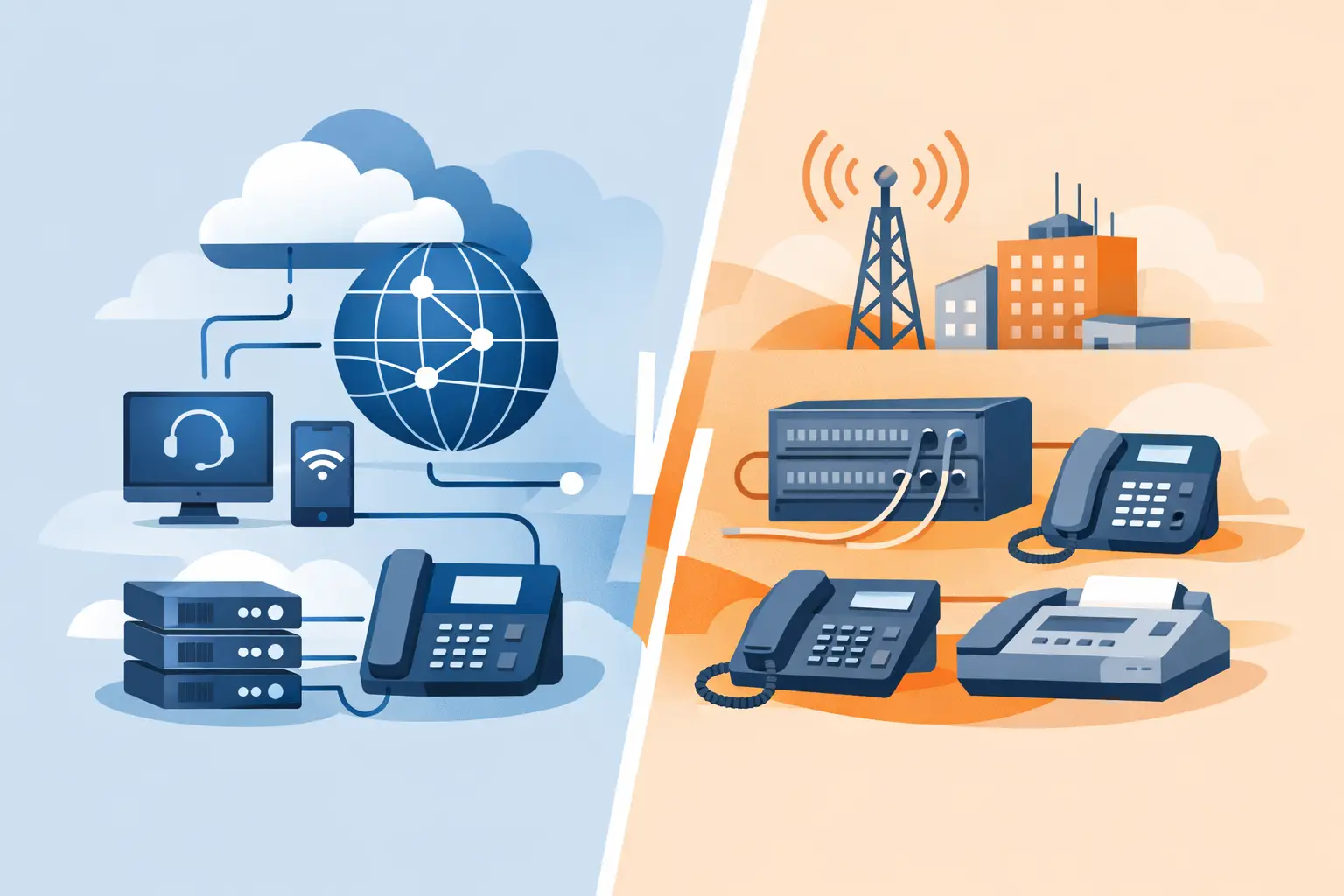
ISDN, or Integrated Services Digital Network, carries voice calls over dedicated digital telephone lines. A business normally pays for a fixed number of channels, with each channel handling one simultaneous call. ISDN2 is commonly used by smaller sites, while ISDN30 provides a larger number of channels for bigger call volumes.
A SIP trunk does the same core job – connecting a phone system to the wider telephone network – but it does so over an IP connection rather than traditional phone lines. SIP stands for Session Initiation Protocol, the signalling standard used to set up and manage calls. In practice, it means voice capacity can be delivered through your business internet connectivity or a dedicated data circuit.
The distinction matters because SIP is designed for a communications environment where people may be in the office, at home, on the road or working across several locations. It can support an existing on-premise phone system, but it also works alongside modern hosted telephony, contact centre and Microsoft Teams voice services.
Why the ISDN switch-off changes the conversation
Openreach plans to retire the traditional PSTN and ISDN network by the end of 2027. This is not just an upgrade deadline for desk phones. Many businesses have services connected to analogue or ISDN lines, including alarms, lift lines, payment terminals, door entry systems and fax equipment.
That makes the change a useful reason to take stock rather than make a rushed like-for-like replacement. A phone system may still work well for your people, but the underlying connectivity it depends on may not have a long-term future. Equally, replacing every handset and platform at once is not always necessary.
A SIP service can provide a measured route forward. It allows some organisations to keep their current PBX for now while removing dependency on ISDN. Others may decide that the timing is right to move fully to cloud calling, giving staff the same business number and calling features on a desk phone, laptop or mobile app.
Flexibility: where SIP has the advantage
With ISDN, adding capacity typically means ordering more physical channels. That can involve lead times, installation work and a commitment to capacity that may sit unused outside peak periods. If a business opens another site, moves premises or experiences seasonal demand, the fixed nature of ISDN can become restrictive.
SIP trunks are generally more flexible. Additional call capacity can be provisioned without installing another set of telephone lines, and numbers can be presented across sites or routed to remote staff. This is valuable for growing businesses, teams with hybrid working arrangements and customer-facing departments that need calls answered wherever the right person is working.
Flexibility does not mean unlimited capacity by default. Your SIP design should still match expected call volumes, concurrent calls and contingency requirements. A busy contact centre, for example, needs more careful capacity planning than a 20-person professional services firm. The benefit is that capacity is easier to adjust as those needs change.
Cost control without false savings
ISDN pricing often includes line rental, channel charges and call costs. It can be predictable, but it may also mean paying for fixed capacity and infrastructure that no longer suits how the business operates.
SIP can reduce line rental costs and simplify call charging, especially where a business has multiple sites or a mixture of office-based and remote employees. Consolidating services onto IP connectivity can also reduce the administrative burden of managing separate legacy lines.
However, the cheapest SIP quote is not always the best commercial choice. Voice quality, support, fraud protection, number porting expertise and resilient routing all affect the real value of the service. A low monthly price offers little comfort if calls fail during an internet outage or your team cannot get a clear answer when something needs attention.
Ask providers to explain what is included: call bundles, concurrent call capacity, setup charges, porting, support hours, resilience options and contract terms. A clear monthly cost is useful, but it should be backed by a solution that protects your ability to serve customers.
Reliability depends on the full design
ISDN has a reputation for reliability because it uses dedicated telephone infrastructure and is not reliant on your standard broadband connection. That is a fair advantage, particularly in locations with poor or unpredictable connectivity.
SIP relies on IP connectivity, so the quality and resilience of that connection are central to the service. A well-designed SIP deployment can be highly dependable, but it should not assume that a single internet circuit will never fail. The right approach may include a second connection, automatic failover to mobile networks, separate routing for priority calls or the ability to divert calls to another office or remote users.
Power also deserves attention. Traditional phone lines could continue working during some local power failures, whereas IP phones, routers and switches need power. Businesses with critical phone lines should consider battery backup, alternative call routing and clear procedures for staff.
There is no one-size-fits-all answer. A small office with low call volumes may be well served by a standard business connection and mobile failover. A healthcare provider, legal practice or busy service desk may need dedicated connectivity and more formal continuity planning.
SIP trunks are not the same as hosted telephony
These terms are often used together, but they solve different parts of the communications puzzle. A SIP trunk connects your existing PBX to the telephone network. It can be a sensible choice if you have a modern, supported phone system and want to preserve that investment.
Hosted telephony moves the PBX functionality into the cloud. Instead of maintaining a telephone system on site, users receive calling features through cloud-managed desk phones, softphones and mobile applications. This can simplify management and make it easier to support flexible working, but it is a broader platform change than simply replacing ISDN lines.
The right route depends on the age and capability of your current PBX, how your people work and what you want communications to look like in the next few years. If your system is nearing end of life, moving straight to hosted telephony may avoid paying twice for transition work. If it is still fit for purpose, SIP can offer a practical bridge to the future.
Planning a confident migration from ISDN
The best migrations begin with discovery, not a product decision. Start by identifying every service that uses ISDN or analogue lines. Include main numbers, direct dials, fax lines, alarms, lifts, broadband, card machines and any specialist equipment. The unexpected dependencies are often the ones that create avoidable disruption.
Next, review how calls actually flow through the business. Which teams receive the most calls? Do staff need to answer calls away from their desks? Are calls recorded, routed by department or reported on? What happens if the main office cannot take calls? This gives you a clearer picture of whether SIP alone, hosted telephony or a combination of services is the right fit.
Number porting should be planned early. Your established business numbers are valuable, and a carefully managed port reduces the risk of customers being unable to reach you. It is also worth scheduling the change around quieter periods and testing call routing before the final switch.
For businesses that want guidance without technical theatre, Bulb Tech can help map the current estate, identify the right migration path and build communications around the way your people and customers actually work.
Making the choice for your business
Choose SIP trunks when you have a compatible PBX, want to replace ISDN without unnecessary disruption and need more adaptable call capacity. Consider hosted telephony when you want to reduce on-site hardware, support hybrid teams and bring calling, collaboration and mobile working into one managed experience.
ISDN may remain in place for some organisations during a planned transition, but it should not be treated as a long-term answer. The priority is to understand your dependencies early, protect customer access and choose a solution that can grow with the business.
Good communications should make it easier for people to reach people. Start with an honest look at what you use today, what your customers expect tomorrow and where a little forward planning can remove a great deal of future pressure.
